AMP8 marks a critical phase in the UK water industry, shaping the strategic priorities for water companies as they work to meet increasingly stringent environmental and regulatory standards. Central to these priorities is the enhancement of sewage treatment processes, which require both innovative infrastructure upgrades and precise operational control. At Rhino, we are dedicated to supporting our clients throughout this cycle, from constructing sludge tank bases to optimising chemical dosing systems that help deliver cleaner effluent and reduce the overall environmental impact of wastewater treatment.
One of the most vital aspects of sewage treatment is effective chemical dosing. This procedure involves the addition of carefully selected chemicals in measured quantities to transform pollutants in raw wastewater into forms that can be more easily separated or neutralised. A well-implemented chemical dosing regime not only protects downstream assets and helps meet regulatory discharge consents, but also enables water companies to improve efficiency and control costs.
Before any chemicals are added, a thorough assessment of the incoming wastewater is conducted. This involves measuring key parameters such as pH, alkalinity, turbidity and the concentration of specific contaminants. By understanding the composition of the wastewater, engineers can select the most appropriate dosing agents and calculate the optimal dosage rates. Common chemicals used in sewage treatment include coagulants like ferric chloride or aluminium sulphate, which cause fine particles and suspended solids to clump together. These particles then form larger flocs that can be easily removed during sedimentation. Other chemicals may include polymers to enhance floc formation, as well as pH adjusters to ensure conditions remain favourable for biological treatment and to protect plant infrastructure from corrosion or scaling.
Once the chemicals are dosed into the wastewater, it is usually mixed vigorously to ensure even distribution. Rapid mixing promotes effective contact between the treatment chemicals and the contaminants, enabling a swift and complete reaction. This is often followed by a gentle mixing phase to allow the newly formed flocs to grow in size without breaking apart. The treated wastewater then flows into sedimentation tanks, where gravity allows the heavier flocs to settle at the bottom, forming a layer of sludge. This sludge is subsequently directed to dedicated tanks for further processing, such as anaerobic digestion or dewatering, which either recovers energy in the form of biogas or readies the solids for disposal or agricultural use.
Disinfection is another critical step, often achieved through chlorination or ultraviolet (UV) irradiation, ensuring that any remaining pathogens are destroyed or rendered inactive before the treated effluent is released into watercourses. The choice of disinfection method can depend on factors such as plant size, local regulations, and the desired quality of the final effluent. Through careful selection of chemicals and equipment, as well as rigorous monitoring and control, modern chemical dosing systems are capable of delivering excellent water quality outcomes while minimising the risk of overuse or chemical wastage.
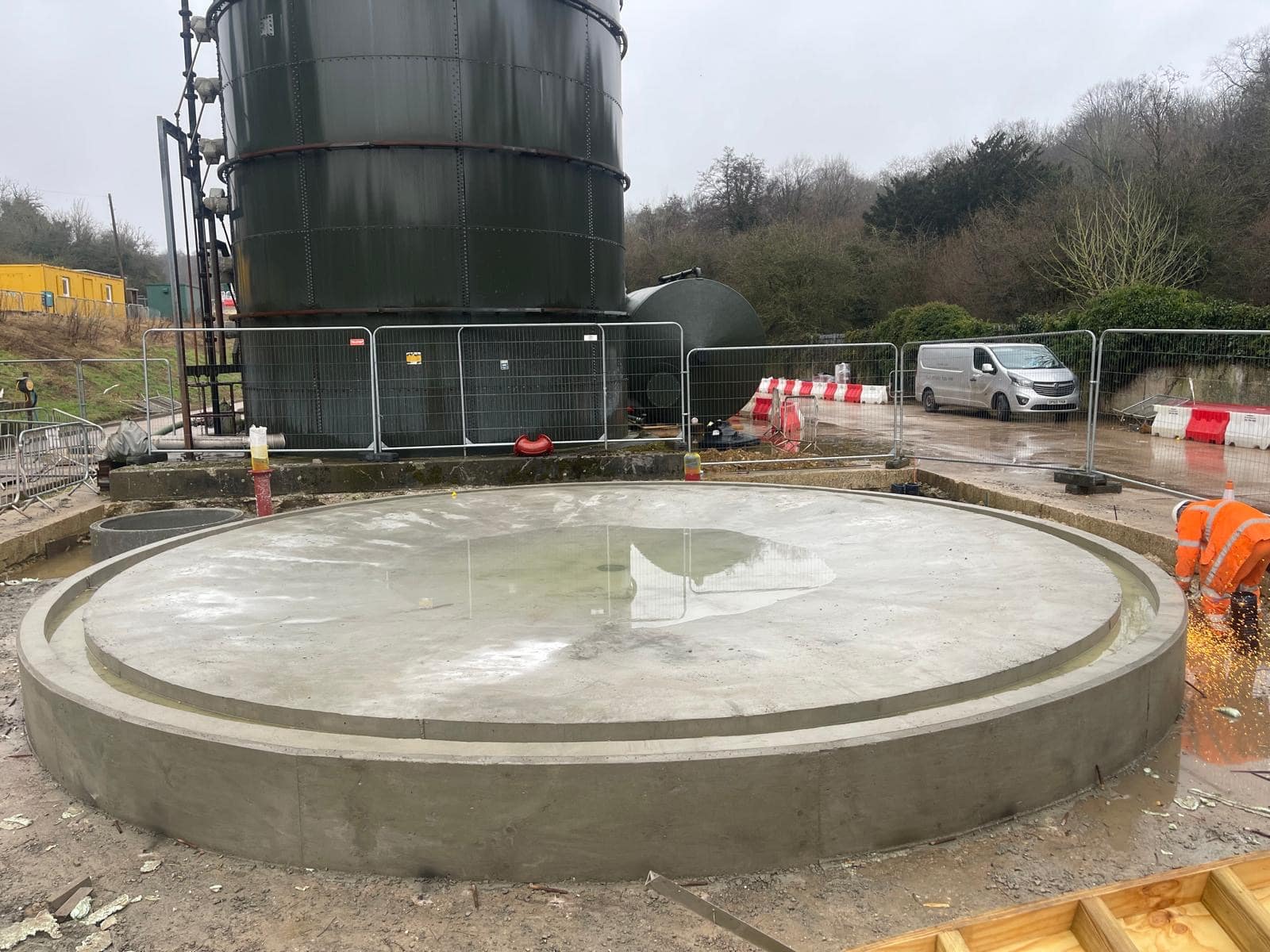
Alongside chemical dosing, robust infrastructure is essential for the smooth running of any sewage treatment works. Sludge tank bases, such as the one pictured, must be designed and constructed to withstand significant loads and corrosive conditions. High-quality concrete mixes, protective coatings and reliable drainage systems all contribute to the longevity and efficiency of these structures. During AMP8, we are seeing an increased emphasis on asset resilience, sustainability and lifecycle performance, meaning that projects like sludge tank base installations need to incorporate the latest materials and design practices. At Rhino, our focus is on delivering these projects to the highest standard, ensuring minimal downtime and disruption to operations.
Beyond infrastructure construction and system upgrades, effective project management and collaboration are vital for meeting AMP8 objectives. At Rhino, we work closely with our clients to ensure that every stage of the project is carefully planned, from initial site surveys and design phases through to commissioning and handover. Our teams are skilled at liaising with multiple stakeholders, such as site operators, regulators and technology providers, to keep projects on track and ensure that all compliance requirements are met. By maintaining a flexible and proactive approach, we can quickly adapt to unexpected site conditions or regulatory changes, helping our clients to stay ahead of the curve in an ever-evolving sector.
Ultimately, AMP8 is not just about meeting regulatory targets; it is about driving real improvements in the way water companies manage and treat wastewater. By combining our expertise in chemical dosing systems with the design and construction of critical infrastructure, Rhino is committed to helping water companies achieve better environmental outcomes, reduce costs, and future-proof their assets. Whether it is installing new sludge tank bases, fine-tuning dosing processes or integrating emerging technologies, our mission is to ensure that UK sewage treatment remains at the forefront of innovation and efficiency, delivering tangible benefits to communities and the environment alike.